
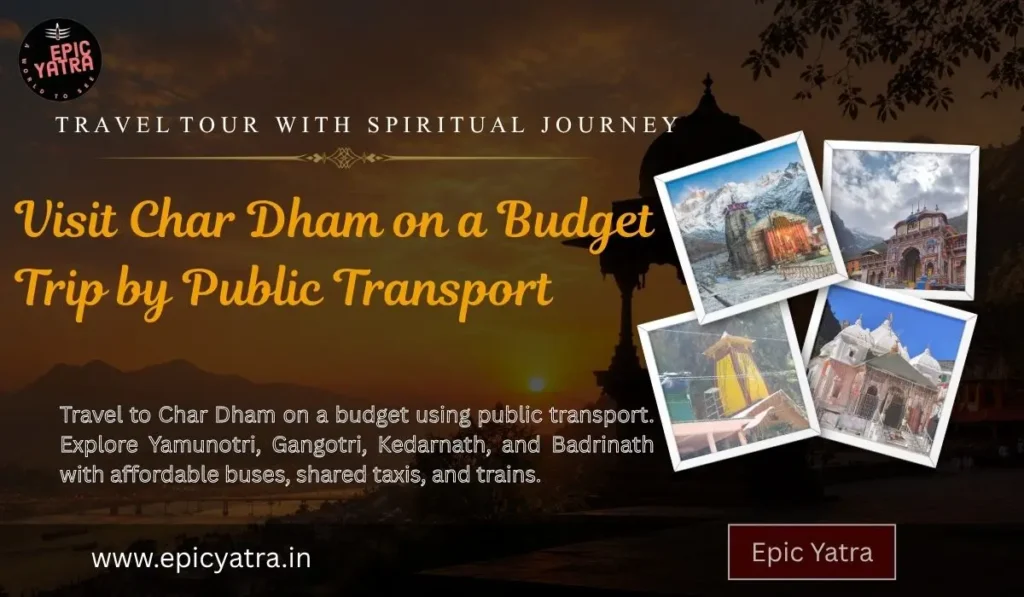
A sacred journey. A shoestring budget. A memory that lasts a lifetime. Imagine standing at the foot of the Himalayas, the cold mountain air filling your lungs, the sound of temple bells echoing through the valleys, and the gentle roar of the Bhagirathi River in the distance. This is not a dream. This is the Char Dham Yatra — and in 2027, you can experience every bit of this magic without spending a fortune. With proper planning and a well-managed Char Dham budget guide, pilgrims can complete this sacred journey comfortably while keeping travel expenses under control.
The Char Dham Yatra covers four of the holiest shrines in Hinduism — Yamunotri, Gangotri, Kedarnath, and Badrinath — nestled deep in the divine mountains of Uttarakhand. Every year, millions of pilgrims from across India and the world make this sacred journey. Many assume it requires a big budget. But the truth? With the right planning, public transport, and this guide in your hand, you can complete the entire Char Dham budget guide for as little as ₹8,000 to ₹20,000 per person.
Yes. You read that right.
This blog is your complete, honest, and practical guide to completing the Chardham Yatra by public transport – written for real pilgrims, not just tourists.
Why Public Transport Is the Best Way to Char Dham
When most people think of Char Dham travel & budget guide, they picture luxury coaches, private taxis, and expensive helicopter rides. But thousands of devoted pilgrims complete this yatra every single year by bus and shared taxi — and many of them say it was the best decision they ever made.
Here is why:
It is significantly cheaper. Bus fares for the entire circuit cost between ₹3,000 and ₹5,000. Compare that to ₹25,000–₹50,000 for private vehicles or ₹1.8 lakh and above for helicopter packages. The savings are massive.
It is more authentic. When you travel by public transport, you sit alongside fellow pilgrims, local villagers, and people who have been making this journey for decades. You hear their stories and share their snacks. You pray together. This is the real Char Dham experience.
It connects you to the land. Mountain roads, winding paths, valleys hidden behind clouds, waterfalls appearing out of nowhere — when you travel slowly by bus, you actually see Uttarakhand. You do not just arrive at temples; you experience the journey between them.
Of course, public transport in the hills is not for everyone. The roads are steep, buses are basic, and delays due to weather or landslides are possible. But if you are someone who values experience over comfort, this is your path.
Plan to Visit Char dham – What You Need to Know First
Before diving into the route and tips, here are the key facts for 2027.
Opening Dates: The Char Dham temples open every year around late April or early May. The exact dates for 2027 will be announced on Basant Panchami (January/February 2027). Yamunotri and Gangotri typically open on Akshaya Tritiya, while Kedarnath opens 5–7 days later due to snowfall at higher altitudes. Badrinath usually opens around the same time.
Season Duration: Temples remain open for approximately six months, closing after the Diwali festival in October or November.
Registration: Biometric registration using your Aadhaar card is mandatory. You will receive real-time SMS alerts about road conditions, landslides, and closures — a potentially life-saving feature.
Best Time to Go: May and June are the busiest months. For fewer crowds and a more peaceful darshan, visit in late September or early October or in late June to early July (weather permitting).
The 10-Day Yatra Char Dham Route by Public Transport
Here is a practical, day-wise itinerary that budget travellers have used successfully:
- Day 1 – Rishikesh: Arrive, complete biometric registration at the Char Dham Registration Centre, and visit Triveni Ghat, Ram Jhula, and Laxman Jhula. Stay overnight.
- Day 2 – Rishikesh to Janki Chatti: Take the direct morning bus or travel via Dharasu Bend and Barkot. Reach Janki Chatti before 4 PM.
- Day 3 – Yamunotri Darshan: Trek 6 km to Yamunotri Temple starting at 5 AM. Return by noon and proceed to Uttarkashi for the night.
- Day 4 – Gangotri Darshan: Early bus or shared taxi to Gangotri. Visit the sacred temple on the banks of the Bhagirathi River. Return to Uttarkashi overnight.
- Day 5 – Uttarkashi to Gaurikund: Travel via Ghansyali and Tilwara (no direct bus). Stay at Gaurikund or nearby Sitapur.
- Day 6 – Kedarnath Darshan: Begin the 16 km trek early. Carry water, snacks, a raincoat, and a walking stick. Return to Sonprayag for the night.
- Day 7 – Sonprayag to Badrinath: Direct buses available in the early morning. Alternatively, travel via Rudraprayag and Chamoli.
- Days 8 and 9 – Badrinath Exploration: Visit Badrinath Temple, Tapt Kund, Mana Village (the last village before Tibet), Vyas Gufa, Ganesh Gufa, Bhim Pul, and the Saraswati River. Give this magical place the time it deserves.
- Day 10 – Return to Haridwar: Morning bus to Haridwar via Joshimath, Chamoli, Rudraprayag, and Devprayag. Stay overnight and head home the next day.
Char Dham Bus Timings & Bus Stand Names and Guide
| Route Leg | Depart From | Bus Stand / Stop | First Bus | Last Bus | Approx. Fare |
|---|---|---|---|---|---|
| Rishikesh → Janki Chatti (Yamunotri) | Rishikesh | ISBT Rishikesh (Sanyukt Yatra Stop) | 7:10 AM | 10:00 AM | ₹200–₹300 |
| Rishikesh → Uttarkashi (for Gangotri) | Rishikesh | ISBT Rishikesh | 5:30 AM | 10:00 AM | ₹150–₹250 |
| Uttarkashi → Gangotri | Uttarkashi | Uttarkashi Bus Stand | 5:30 AM | 3:00 PM | ₹100–₹150 |
| Rishikesh → Sonprayag (for Kedarnath) | Rishikesh | ISBT Rishikesh | 5:00 AM | 9:00 AM | ₹250–₹350 |
| Sonprayag → Badrinath | Sonprayag | Sonprayag Bus Stand | 5:00 AM | 5:30 AM | ₹150–₹250 |
| Badrinath → Haridwar (return) | Badrinath | Badrinath Bus Stand | 5:30 AM | 8:00 AM | ₹300–₹450 |
GMVN Lodges & Dharamshalas per Dham
| Dham | GMVN Property | Location | Budget Dharamshalas | Approx. Cost/Night |
|---|---|---|---|---|
| Yamunotri | GMVN TRH Yamunotri | On trek route (foot access only from Janki Chatti) | Janki Chatti Dharamshala, Rana Chatti Dharamshala | ₹300–₹800 |
| Gangotri | GMVN TRH Gangotri | 0.5 km from Gangotri Temple | Gangotri Dharamshala (near temple), Uttarkashi Dharamshalas | ₹400–₹1,000 |
| Kedarnath | GMVN Tents/Camps at Linchauli & Base Camp | On trek route | Kedarnath Dharamshala (at temple), Sonprayag & Sitapur guesthouses | ₹300–₹700 |
| Badrinath | GMVN TRH Badrinath (Devlok) | Near Badrinath Temple | Badrinath Dharamshala (Badri Kedar Temple Committee), Joshimath GMVN | ₹600–₹1,680 |
Budget Breakdown for Char Dham & Guide
| Expense | Estimated Cost (Per Person) |
|---|---|
| Bus fares (full circuit) | ₹3,000 – ₹5,000 |
| Shared taxis (where needed) | ₹2,000 – ₹4,000 |
| Accommodation (10 nights, budget) | ₹3,000 – ₹5,000 |
| Food (10 days, simple meals) | ₹2,000 – ₹3,000 |
| Pony / Palanquin (optional) | ₹3,000 – ₹8,000 |
| Miscellaneous / emergency | ₹1,000 – ₹2,000 |
| Total Estimate | ₹11,000 – ₹27,000 |
This is a fraction of what most packaged tours charge — and the spiritual experience is exactly the same.
What to Buy at Each Dham
Shopping is a joyful part of the yatra, and each dham offers something unique:
- Gangotri – Fresh apples and high-quality dry fruits from the mountains
- Kedarnath – Sacred Rudraksha beads, known for their spiritual significance
- Badrinath – Van Tulsi garlands, Laddu Prasad, Kuber Coins, Hing (asafoetida), and rare herbal products
- Mana Village – Handcrafted woolen shawls, socks, and local herbal teas made by the villagers of India’s last inhabited village
What to Buy at Each Dham
| Stage | Distance | Cumulative | Key Facilities | Tips |
|---|---|---|---|---|
| Gaurikund (Start) | 0 km | 0 km | Pony booking, toilets, shops, registration check | Start by 5:00 AM. Buy bamboo walking stick here |
| Jungle Chatti | 4–6 km | 4–6 km | Tea stalls, rest sheds, first aid, pony changeover | Gentlest stretch — set your pace here, don’t rush |
| Bheem Bali | ~3 km | ~7 km | GMVN tents, food, free drinking water, free Wi-Fi, medical camp | Good mid-point rest stop. Altitude starts increasing |
| Linchauli | ~4 km | ~11 km | GMVN & private tents, medical camp, partial Jio/BSNL signal | Steepest section ahead — go slow. Last signal point |
| Base Camp | ~3 km | ~14 km | GMVN camp, oxygen cylinders, SDRF post | Book GMVN camp here if staying overnight |
| Kedarnath Temple | 1 km | 16 km | Temple, dharamshalas, food stalls, NDRF medical post | Temple darshan: 4 AM–12 PM & 3 PM–9 PM. Morning is best |
Most Asked Questions
Q1: Can I Complete the Char Dham Yatra Entirely by Public Transport?
Yes! Government buses and shared taxis connect all four dhams. You need patience and flexibility, but thousands of budget pilgrims do it every year. Just reach each stop before 4 PM and keep buffer days for weather delays.
Q2: What Are the Expected Char Dham Yatra 2027 Opening Dates?
Official dates will be announced on Basant Panchami (Jan/Feb 2027). Yamunotri, Gangotri, and Badrinath are expected to open in late April 2027. Kedarnath opens 5–7 days later. Temples close after Diwali in October or November.
Q3: How much does the Char Dham budget guide by public transport?
Total cost ranges from ₹11,000 to ₹27,000 per person. Bus fares cost ₹3,000–₹5,000, accommodation ₹3,000–₹5,000, and food ₹2,000–₹3,000. Much cheaper than private taxis (₹25,000–₹50,000) or helicopters (₹1.8 lakh+).
Q4: Is Registration Mandatory for Char Dham?
Yes, it is compulsory. Register at registrationandtouristcare.uk.gov.in, on the Tourist Care Uttarakhand app, or by WhatsApp “Yatra” to +91-8394833833. Offline counters are available in Haridwar and Rishikesh. Always carry your registration certificate.
Q5: What Is the Best Time to Visit Char Dham Without Crowds?
Avoid May and June (peak season). Visit in the last two weeks of September or first two weeks of October for peaceful darshan, shorter queues, and stunning scenery. Late June to early July also works if the monsoon is light.
Q6: Which Route Should I Follow for Char Dham by Bus?
Follow this order: Rishikesh → Janki Chatti → Uttarkashi → Gaurikund → Badrinath → Haridwar. No direct bus from Uttarkashi to Gaurikund — change at Ghansyali and Tilwara. Always reach your stop before 4 PM, as hill buses stop after that.
Q7: What Should I Pack for Char Dham Yatra by Public Transport?
Pack light — one backpack only. Must-haves: thermal wear, raincoat, woollen cap and gloves, walking stick, power bank, medicines (including altitude sickness tablets), water bottle, dry snacks, Aadhaar card, and your registration certificate.
Q8: Is Char Dham Yatra by Public Transport Safe for Solo Travellers?
Yes, for fit and experienced travellers. Register on the government portal for real-time alerts. Carry cash, as ATMs are rare near the dhams. Use BSNL or Jio for best network coverage. Always inform someone at home about your daily itinerary. Families and older people should travel with a trusted tour operator.
Final Thoughts – Take That Step
The Char Dham Yatra is not just a trip. It is a transformation.
Standing at the feet of Lord Kedarnath after a 16 km trek or watching the sun rise over the Badrinath temple with snow-capped peaks in the background – these are moments that no price tag can capture. The best part is that a Char Dham Yatra budget does not have to be high to experience these unforgettable sights. With proper planning and the use of public transport, you can complete this sacred journey without spending a fortune while still enjoying its spiritual and natural beauty.
All you need is a determined heart, a light backpack, a little patience, and this guide.
Plan your Char Dham Yatra early by public transport in 2027. Register as soon as the portal opens. Book your accommodation in advance for peak months. And trust the journey – because every Himalayan road, every creaky bus, and every shared taxi ride is part of the pilgrimage itself.
May Lord Kedarnath and Lord Badri Vishal bless your journey with safety, peace, and divine grace.
Need expert help planning your Char Dham Yatra 2027?
📞 Phone: +91 8510003060 📧 Email: epicyatra@gmail.com 🌐 Website: www.epicyatra.com
- September October Chardham Yatra – Complete Package Details
 The Chardham Yatra 2026 is one of the most spiritually significant journeys in India, taking… Read more: September October Chardham Yatra – Complete Package Details
 - Amarnath Yatra Registration Guide
 Amarnath Yatra Registration Guide: Documents, Fees and Process Every year, thousands of pilgrims begin planning… Read more: Amarnath Yatra Registration Guide
 - Amarnath Yatra Route Guide: Distance, Trek and Facilities Explained
 Amarnath Yatra 2027 Route Guide — Baltal, Pahalgam & Everything You Need to Know There… Read more: Amarnath Yatra Route Guide: Distance, Trek and Facilities Explained